

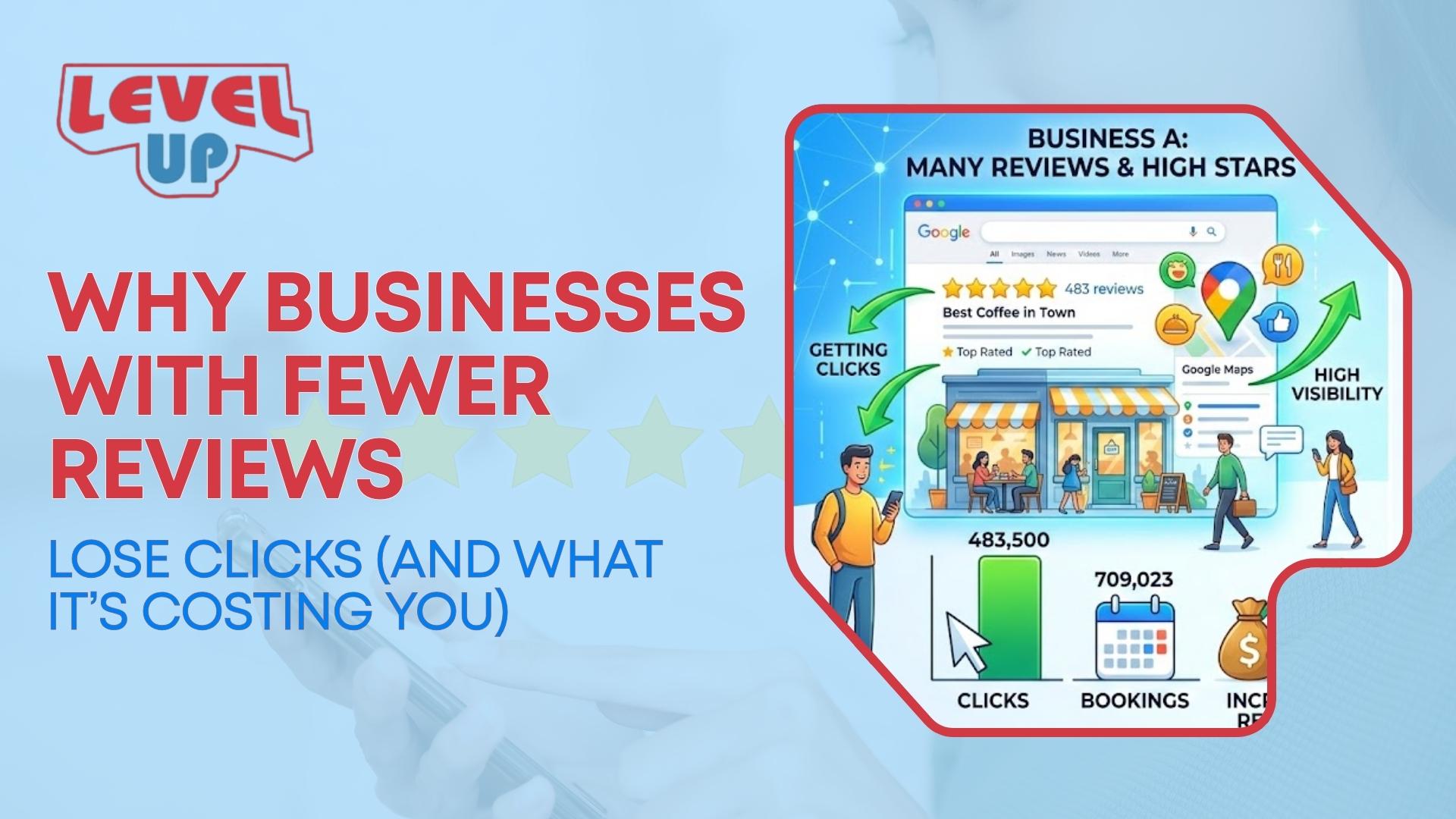
Why Businesses With Fewer Reviews Lose Clicks | Importance of Online Reviews
In today’s digital marketplace, attention is currency. When potential customers search for a product or service, they’re presented with multiple options within seconds, especially on Google Search and Google Maps. Yet, despite offering excellent services, many businesses struggle to attract clicks simply because they lack one critical factor: online reviews.
If your competitors have more reviews, even if their service isn’t necessarily better, they’re likely getting more clicks. And more clicks often mean more calls, bookings, and revenue.
So why do businesses with fewer reviews lose clicks? And what does this reveal about the true importance of online reviews in local SEO and digital marketing?
Let’s break it down.
The Psychology Behind Click Behavior
When customers search online, they make decisions in seconds. Studies consistently show that people trust peer opinions more than advertisements. Reviews act as digital word-of-mouth, influencing buying decisions almost instantly.
Here’s what typically happens during a local search:
A user searches for a service (e.g., “best marketing agency near me”).
They see 3–5 businesses listed in the Local Pack.
Their eyes immediately scan:
⭐ Star rating
Total number of reviews
Business name
Proximity
If your business has 8 reviews and your competitor has 127 reviews, even if both have a 4.6-star rating, users are more likely to click on the one with 127 reviews.
Why?
Because higher review volume signals:
Greater credibility
Established reputation
Higher customer trust
Popularity and demand
This is where the importance of online reviews becomes undeniable.
The Click-Through Rate (CTR) Impact of Reviews

Click-through rate (CTR) is a major engagement metric in SEO. If more users click your listing compared to competitors, Google interprets that as a positive signal, potentially improving your ranking over time.
Businesses with fewer reviews often experience:
Lower CTR from search results
Reduced engagement
Fewer calls and website visits
Slower SEO growth
It’s not just about ranking, it’s about winning the click.
A listing with:
⭐ 4.8 rating and 180 reviews
will almost always outperform⭐ 4.8 rating and 9 reviews
Even though the ratings are identical.
The difference? Perceived trust.
Why Review Quantity Influences Buyer Confidence
Consumers use mental shortcuts when making decisions online. Review count acts as social proof.
Social Proof Explained
Social proof means people rely on the actions and opinions of others to guide their own decisions.
If hundreds of people have chosen a business and left feedback, it reduces uncertainty. Fewer reviews create hesitation:
“Is this business new?”
“Do they lack experience?”
“Why haven’t many people reviewed them?”
“Are they reliable?”
Even if your business is outstanding, perception influences action.
This is one of the strongest reasons why businesses with fewer reviews lose clicks.
The Competitive Gap: Reviews as a Barrier to Entry
In competitive industries like legal services, home services, restaurants, or marketing agencies, review volume becomes a barrier to entry.
Imagine:
Company C might provide excellent service, but the review gap makes it harder to compete for attention.
In competitive local markets, businesses often need:
30–50 reviews to be considered credible
75–150+ reviews to dominate
Consistent monthly review growth
Without this, they lose visibility and clicks to competitors.
The Importance of Online Reviews for SEO
Online reviews influence SEO in multiple ways:
1. Improved Local Ranking Signals
Google evaluates:
Review quantity
Review velocity (frequency of new reviews)
Review diversity
Review sentiment
More high-quality reviews help strengthen your local prominence — one of Google’s core local ranking factors.
2. Keyword Relevance Within Reviews
Customers naturally mention:
Services
Products
Locations
Staff names
Specific experiences
These keywords help Google associate your business with relevant search terms.
Example:
“Best digital marketing agency in Prescott with amazing SEO results.”
That review reinforces geographic and service-related keywords organically.
3. Increased User Engagement
Listings with more reviews generate:
Higher click rates
More direction requests
More phone calls
Google interprets engagement as a sign of relevance.
The Snowball Effect of Reviews
Reviews create momentum.
More reviews → More clicks → More customers → More reviews.
On the other hand:
Fewer reviews → Fewer clicks → Fewer customers → Slow review growth.
Businesses that actively build reviews experience compounding growth. Those who ignore reviews fall behind.
Why Star Rating Alone Isn’t Enough
Many businesses assume a 5-star rating with a few reviews is sufficient.
But consumers don’t just look at rating — they look at confidence level.
A 5.0 rating with 6 reviews doesn’t carry the same weight as a 4.8 rating with 180 reviews.
Buyers subconsciously think:
“A slightly lower rating with more reviews is more realistic and trustworthy.”
Too few reviews can even create suspicion:
“Are these reviews real?”
“Did they just ask friends to review?”
Consistency and volume remove doubt.
How Fewer Reviews Hurt Conversion Rates

Even if someone clicks your listing, fewer reviews can still reduce conversion rates.
Potential customers may:
Visit your website but hesitate to call
Compare you with competitors
Leave and choose a more established business
Trust is built through reassurance, and reviews provide that reassurance.
Common Reasons Businesses Have Fewer Reviews
Many businesses don’t intentionally ignore reviews. Common reasons include:
Not asking customers for feedback
Lack of a review generation system
Fear of negative reviews
Inconsistent customer follow-up
No strategy in place
The truth is: satisfied customers often need a reminder.
How to Stop Losing Clicks (Action Plan)
If you want to leverage the importance of online reviews and stop losing clicks, implement these strategies:
1. Create a Review Acquisition System
Make review collection part of your workflow:
After a successful transaction
After completing a project
After positive feedback
Train your team to ask naturally and consistently.
2. Simplify the Process
Provide:
Direct review links
QR codes
SMS follow-ups
Email reminders
Reduce friction to increase participation.
3. Respond to Every Review
Engagement matters.
Responding to reviews:
Encourages more people to leave feedback
Shows accountability
Builds brand personality
Signals activity to search engines
4. Focus on Experience First
Reviews are a byproduct of excellent service. Deliver consistent, memorable experiences, reviews will follow.
5. Monitor Competitor Benchmarks
Search your primary keywords and analyze:
Average competitor review count
Average rating
Review recency
Set realistic targets based on your industry.
How Many Reviews Should You Aim For?
There’s no universal number, but a practical benchmark:
Minimum credibility: 25–30 reviews
Competitive positioning: 50–75 reviews
Market authority: 100+ reviews
More important than hitting a number is maintaining steady growth.
Aim for:
3–5 new reviews per month (small businesses)
8–15 per month (high-volume businesses)
Consistency builds momentum.
Long-Term Benefits of Strong Review Presence
Beyond clicks, online reviews:
✔ Increase brand trust
✔ Improve conversion rates
✔ Reduce customer hesitation
✔ Strengthen SEO performance
✔ Build long-term authority
✔ Provide valuable customer insights
Reviews also act as user-generated marketing content, influencing prospects before they ever speak to you.
Final Thoughts: Reviews Are Revenue
The reason businesses with fewer reviews lose clicks isn’t just about numbers, it’s about trust.
In search results, you have seconds to win attention. Review volume signals reliability. Rating signals satisfaction. Recency signals relevance.
When competitors have more social proof, they capture the majority of clicks, even if your service quality is equal or better.
The importance of online reviews goes beyond SEO. Reviews influence perception, behavior, and buying decisions at every stage of the customer journey.
If your business wants to grow online visibility, increase conversions, and dominate local search, review strategy isn’t optional.
It’s essential.
FAQs
1. Why do businesses with fewer reviews get fewer clicks?
Because consumers rely on social proof. Higher review counts signal credibility and popularity, increasing trust and click-through rates.
2. Is star rating or review count more important?
Both matter, but review count often influences initial click decisions more strongly when ratings are similar.
3. How many reviews does a business need to compete locally?
While it varies by industry, most businesses need at least 30+ reviews to be seen as credible and 50–100+ in competitive markets.
4. Can having too few reviews hurt SEO rankings?
Yes. Fewer reviews can reduce click-through rates and local prominence signals, indirectly impacting SEO performance.
5. How can I increase online reviews ethically?
Ask satisfied customers consistently, simplify the review process, provide great service, and follow Google’s review guidelines.