

What Reputation Management Actually Means for a Local Business
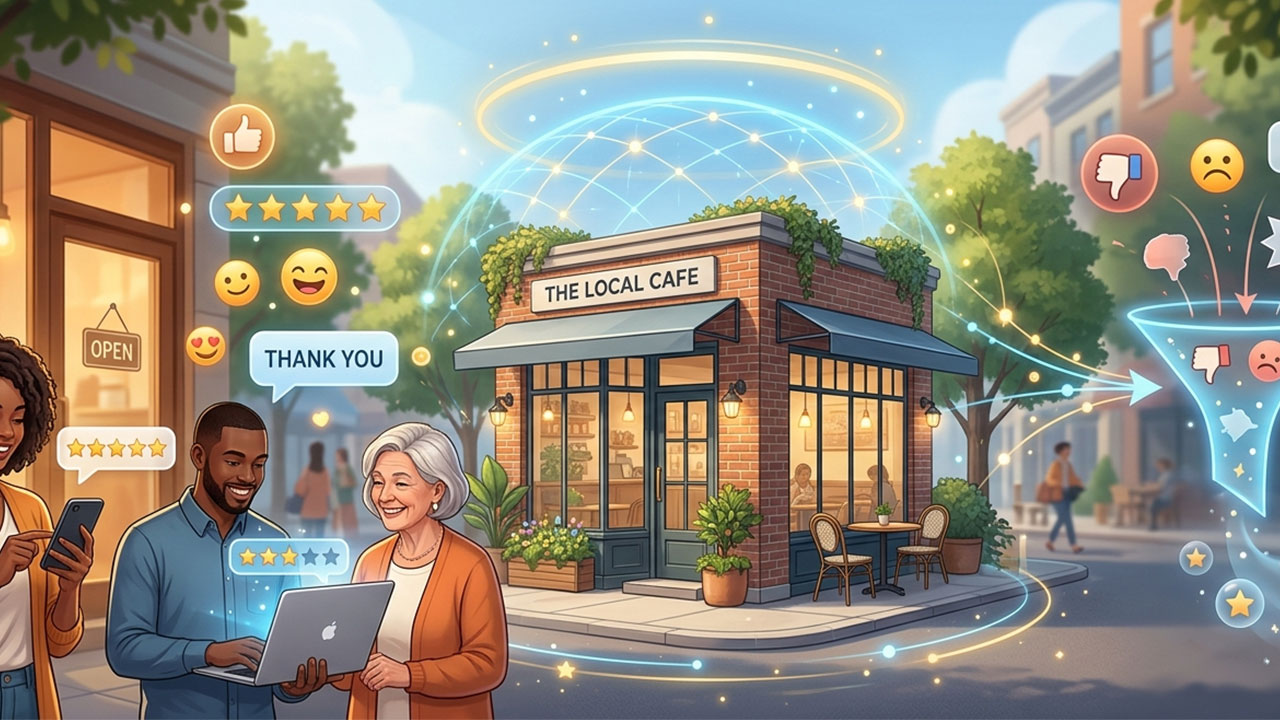
When most small business owners hear the phrase "reputation management," they picture someone responding to a nasty Yelp review or burying a bad article. But reputation management for small business is actually something far more foundational, and far more powerful, than damage control.
It's the ongoing practice of shaping how your business is perceived online and in your community, before, during, and after someone becomes a customer. For a local business, your reputation isn't just a marketing asset. It's the difference between a phone that rings and one that doesn't.
This guide breaks down what reputation management really means at the local business level, why it matters more now than ever, and what it actually looks like in practice.
Ready to level up your reputation? Let's talk.
Why Your Reputation Is Your Most Valuable Business Asset
Think about the last time you chose a local restaurant, plumber, or salon. Chances are, you Googled it first. You checked the star rating. You skimmed a few reviews. Maybe you looked at the photos other customers posted.
Your potential customers are doing the exact same thing to your business, right now, without you knowing. Here's what the data tells us:
93% of consumers say online reviews influence their purchasing decisions.
88% of people trust online reviews as much as personal recommendations from friends.
A single star increase on Yelp can lead to a 5–9% increase in revenue.
Businesses with fewer than 4 stars on Google lose a significant share of potential customers before they ever make contact.
For a local business, this isn't abstract marketing data. This is foot traffic, phone calls, and revenue, or the absence of them.
What Reputation Management for Small Business Actually Includes
Reputation management isn't one thing. It's a combination of proactive and reactive strategies that work together to make your business look trustworthy, responsive, and worth choosing. Here's what it actually covers:
1. Review Generation: Getting Reviews in the First Place
The most common mistake local businesses make is waiting for reviews to happen. Happy customers rarely leave reviews on their own, but unhappy customers almost always do. That imbalance can quietly destroy your star rating.
Proactive review generation means building a simple, consistent process for asking satisfied customers to leave a review on Google, Facebook, or industry-specific platforms. This could be a follow-up text after a service, a QR code at checkout, or an automated email sequence.
2. Review Monitoring: Knowing What's Being Said
You can't manage what you don't track. Reviews are being left about your business on Google, Yelp, Facebook, TripAdvisor, and dozens of other platforms, often without any notification to you.
Reputation monitoring means having a system in place, whether manual or automated, that alerts you when new reviews are posted so you can respond in a timely way. Speed matters: a review left unanswered for weeks signals to potential customers that you don't care.
3. Review Response: Responding Like a Professional
Responding to reviews, both positive and negative, is one of the highest-leverage activities in reputation management for small business. Here's why:
Responding to positive reviews reinforces customer loyalty and shows appreciation.
Responding to negative reviews shows professionalism and gives you the chance to correct the record.
Potential customers read your responses just as much as the reviews themselves.
A well-crafted response to a 1-star review can actually win back potential customers who see it. The goal isn't to "win" the argument, it's to demonstrate that you're a business that takes accountability seriously.
4. Online Presence Consistency: Looking Legit Everywhere
Your reputation isn't just what customers say about you, it's also what people find when they search for you. Inconsistent business information across directories (wrong hours on Google, different phone number on Yelp, old address on Apple Maps) quietly erodes trust and hurts your local SEO ranking.
Reputation management includes auditing and maintaining consistent NAP data (Name, Address, Phone number) across all platforms where your business is listed.
5. Social Proof Amplification: Making Your Best Reviews Work Harder
Collecting reviews is step one. Putting them to work is step two. Strong reviews should be featured on your website, shared on social media, and referenced in your marketing materials. Turning customer feedback into visible social proof creates a trust loop that continuously attracts new customers.
Start getting the reviews your business deserves.
Proactive vs. Reactive Reputation Management: What's the Difference?
Most businesses only think about reputation management when something goes wrong. That's reactive, and while it's necessary, it's not enough.
Proactive reputation management means building systems before a problem occurs:
Consistently asking happy customers for reviews so your rating reflects your real quality.
Monitoring mentions of your business name so you catch issues early.
Publishing content that builds your authority and establishes your brand story.
Maintaining accurate listings so customers can always find and reach you.
Reactive reputation management, handling complaints, responding to crises, addressing false reviews, is easier and less stressful when you've built a strong foundation first. A business with 200 positive reviews can weather a handful of negative ones. A business with 8 reviews cannot.
Common Reputation Management Mistakes Local Businesses Make
Ignoring reviews altogether
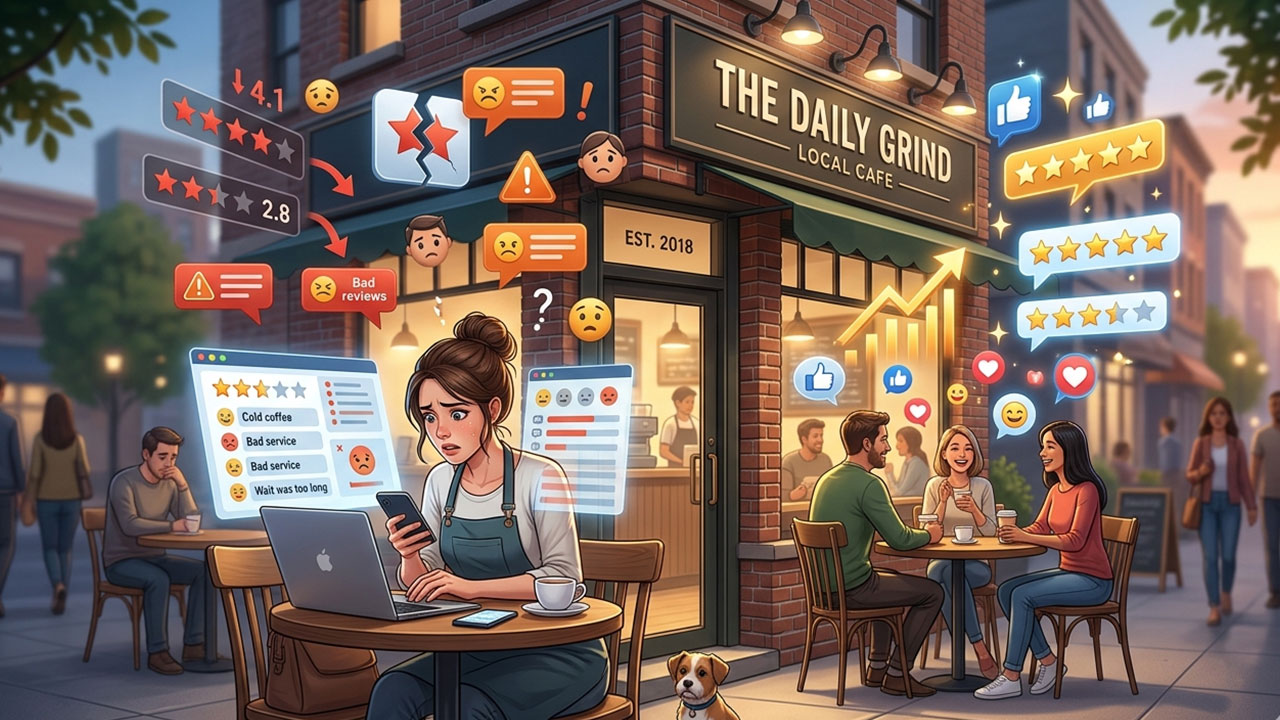
No response signals indifference. Even a brief, genuine thank-you to a 5-star review builds goodwill, with the reviewer and with everyone else reading it.
Getting defensive with negative reviews
It's natural to want to defend your business. But public arguments with customers, even justified ones, almost always make your business look worse. The right approach is calm, empathetic, and solution-focused.
Buying fake reviews
Fake reviews violate platform terms of service and can result in your listing being penalized or removed entirely. Beyond the legal and platform risk, savvy customers can often spot inauthentic reviews, which damages trust more than a low rating would.
Only focusing on Google
Google is the most important platform, but it isn't the only one. Depending on your industry, Yelp, Facebook, TripAdvisor, Houzz, Healthgrades, or industry-specific directories may be where your customers are searching first.
How to Start Managing Your Reputation as a Local Business
You don't need a big budget or a PR firm to get started. Here's a practical framework for reputation management for small business:
1. Audit your current reputation. Search your business name on Google, Yelp, and Facebook. Note your current star rating, how many reviews you have, and how recently they were posted.
2. Claim and complete your listings. Make sure your Google Business Profile is claimed, verified, and complete with accurate hours, photos, and business description. Do the same on any other platforms relevant to your industry.
3. Build a review request process. Create a simple, repeatable way to ask happy customers for reviews. This could be a text message follow-up, an email, or a QR code at your location.
4. Set up monitoring. Use Google Alerts for your business name. Set up notifications for new reviews on your key platforms so nothing slips through the cracks.
5. Respond consistently. Commit to responding to every review positive or negative, within 48 hours. Keep responses professional, genuine, and specific to what the reviewer mentioned.
6. Amplify what's working. Screenshot and share standout reviews on social media. Feature testimonials on your website. Let your best customers do the marketing for you.
How Long Does Reputation Management Take to Show Results?
This is one of the most common questions local business owners ask, and the honest answer is: it depends on where you're starting from.
If you have very few reviews, you can see meaningful improvement in your star rating and review volume within 60 to 90 days of a consistent outreach strategy. If you're managing a reputation crisis or recovering from a period of neglect, expect 3 to 6 months of sustained effort before you see a significant shift.
The compounding effect is real: the more reviews you have, the more credible your rating becomes, and the more your listing gets surfaced in local search results. Reputation management and local SEO are tightly linked, Google favors businesses with recent, frequent, high-quality reviews.
Frequently Asked Questions
Is reputation management only for businesses that have a problem?
No, and waiting until you have a problem is one of the most common mistakes. Reputation management is most effective as an ongoing, proactive strategy, not a crisis response.
Do I need to respond to positive reviews?
Yes. Responding to positive reviews builds loyalty, signals engagement to potential customers, and can improve your local SEO ranking. Keep responses warm and specific.
Can I remove a negative review?
You can flag reviews that violate platform policies (fake, off-topic, or abusive reviews may be removed). But you cannot remove legitimate negative reviews. The better strategy is to respond well and generate enough positive reviews that the negative ones represent a small minority.
How does reputation management affect local SEO?
Significantly. Google's local ranking algorithm takes into account review quantity, recency, and quality. Businesses with consistent, recent reviews rank higher in the local pack meaning more visibility without paying for ads.
Should I use a reputation management service or do it myself?
Small businesses with limited time often benefit from working with a service or agency that specializes in this. The key is having a system whether you run it yourself or have help that runs consistently.
Ready to Take Control of Your Online Reputation?
Level Up Business helps local businesses build, manage, and grow their online reputation — so customers find you, trust you, and choose you.